Traditional VPN vs ZTNA
Many discussions about modern security start with remote access.
Modern Security Architecture – Part 1: Traditional VPN vs ZTNA
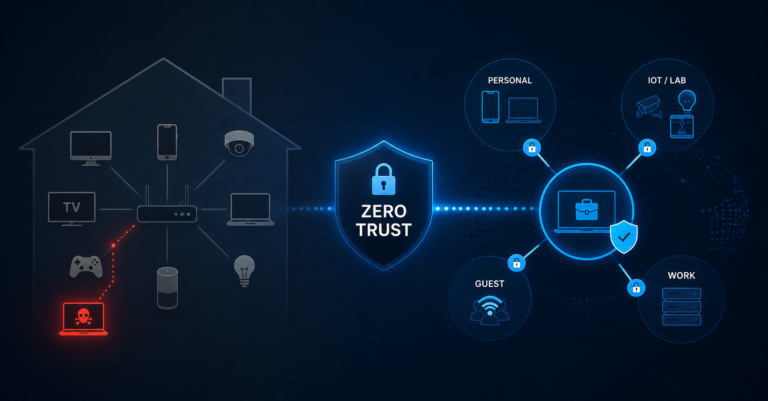
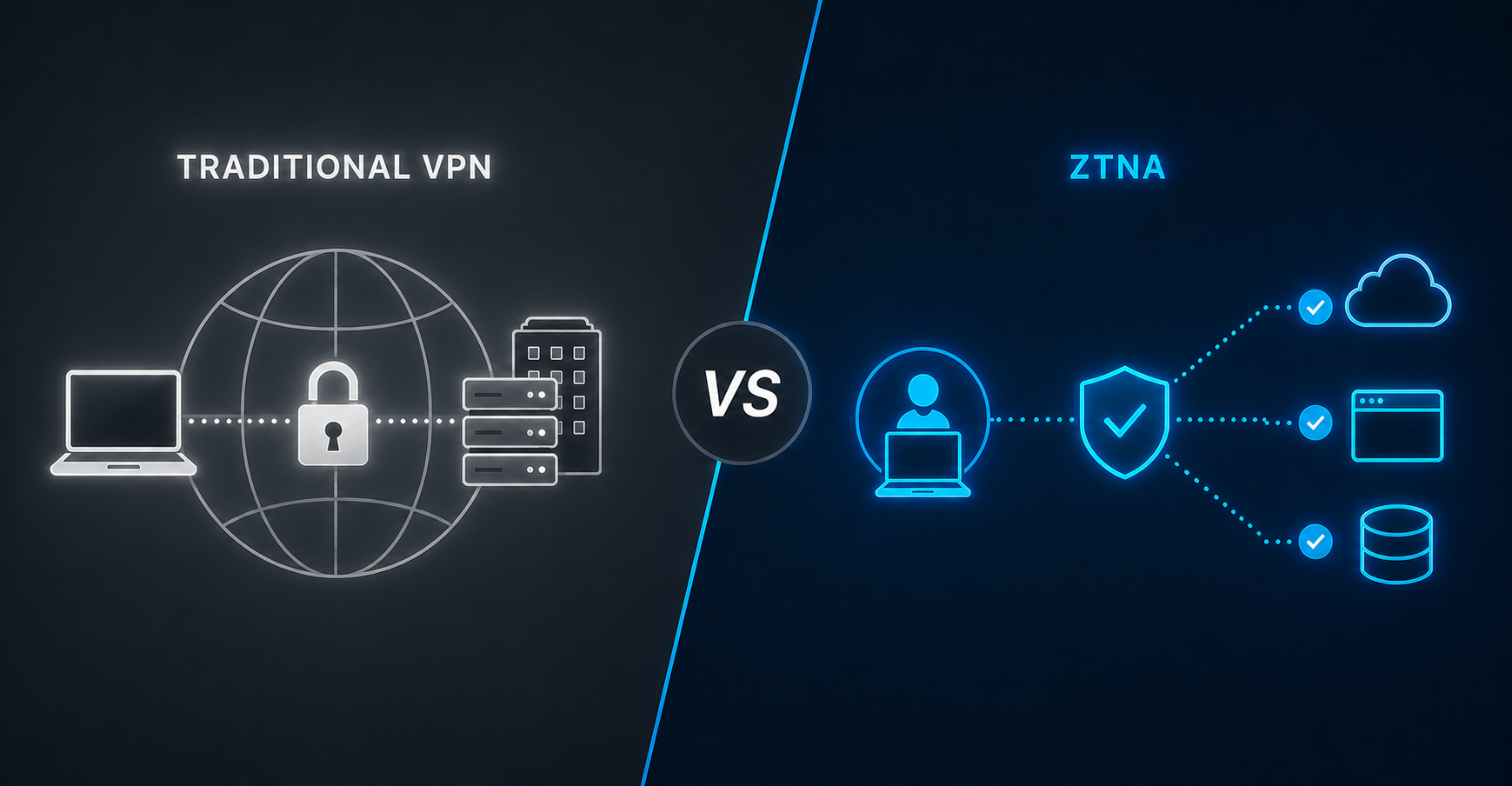
Traditional VPNs and ZTNA (Zero Trust Network Access) are often positioned as solving the same problem: enabling secure remote access.
But they approach it from completely different architectural assumptions.
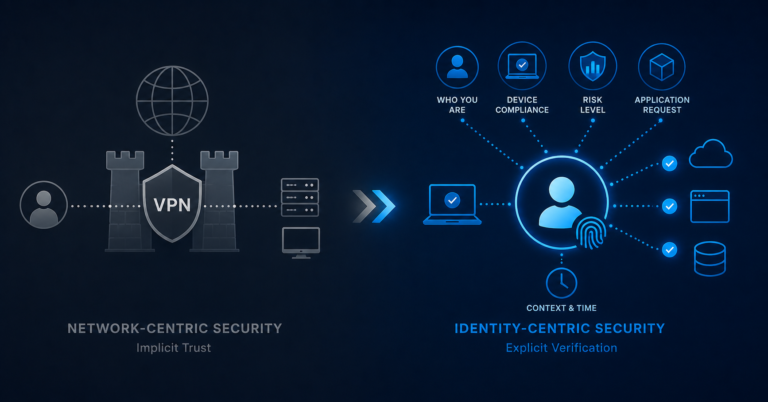
VPNs extend the network to the user, providing broad connectivity after authentication, increasing attack surface and enabling potential lateral movement.
ZTNA connects the user directly to the application, enforcing identity and context-based access decisions for each request, without exposing the internal network or relying on implicit trust.
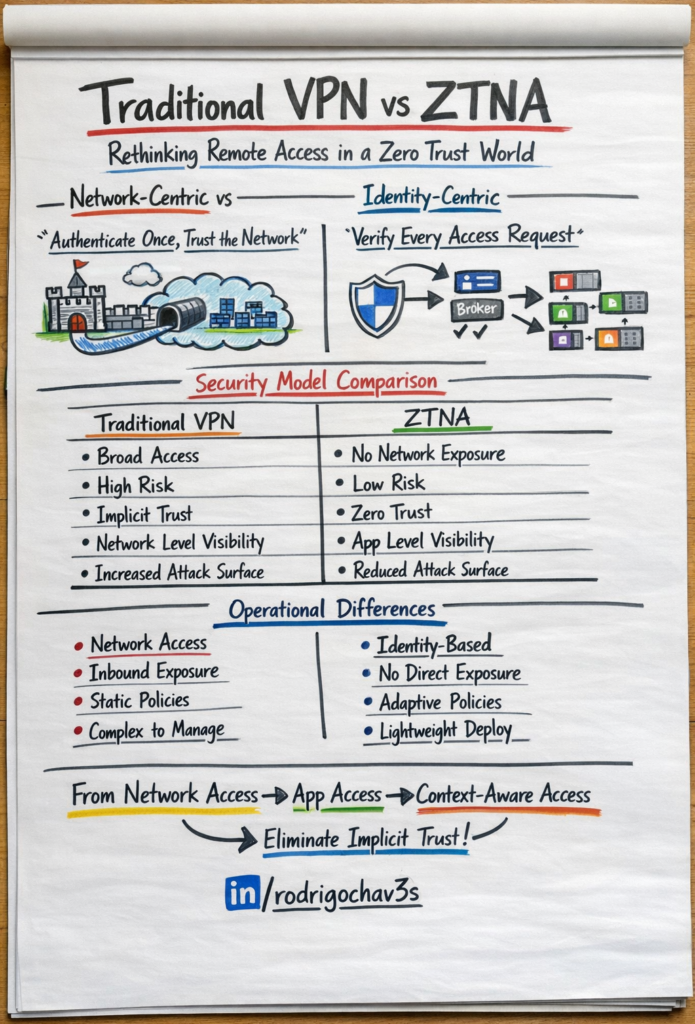
This shift from network-centric trust to per-application, context-aware access directly impacts security posture, operational complexity, and user experience.
Same goal. Very different trust model.