Applying a Zero Trust Mindset
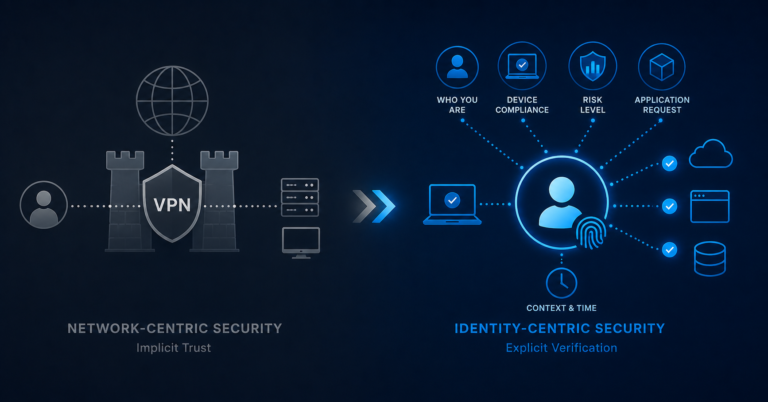
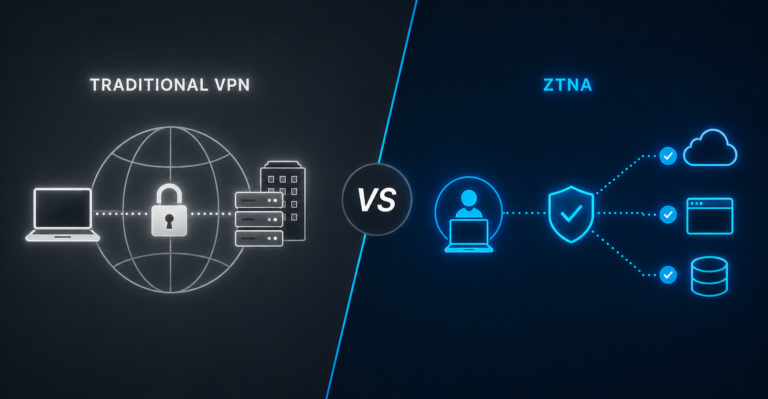
Zero Trust is often summarized with a few simple ideas:
- Never trust, always verify
- Assume breach
- Enforce least privilege
But what do these concepts actually look like in practice?
Modern Security Architecture – Part 2: Applying a Zero Trust Mindset
You don’t need to think about large environments to apply the Zero Trust mindset. Consider a very common scenario: remote and hybrid work.
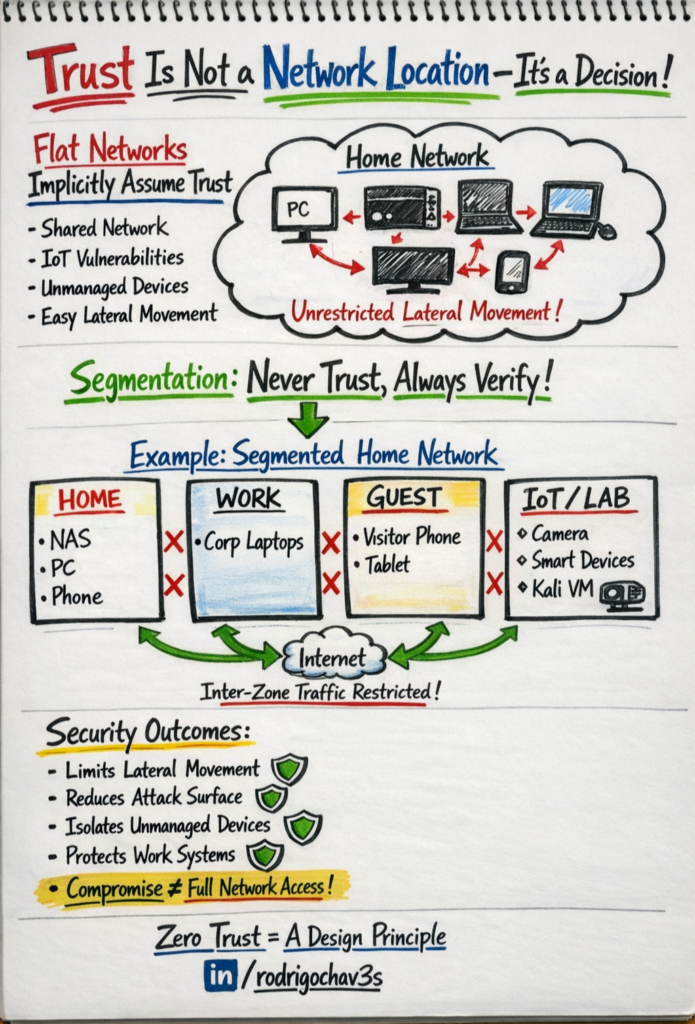
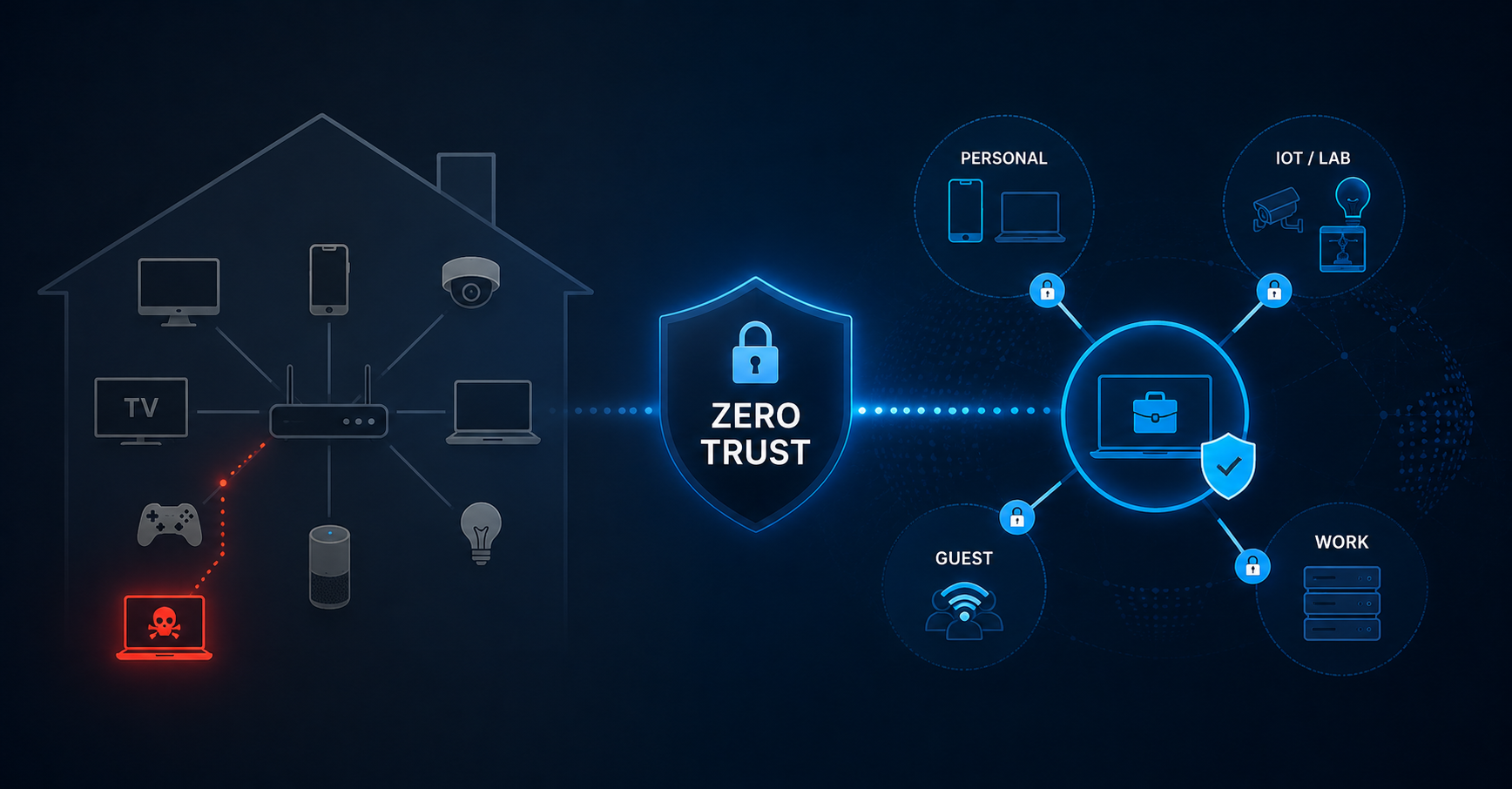
Work devices often connect from home networks that also host personal computers, smartphones, smart TVs, cameras, and other IoT devices. In many cases, all of these systems share the same flat network, implicitly trusting devices that have completely different ownership, purpose, and security posture.
This creates challenges such as:
- IoT devices that may lack hardening or regular security updates
- Unmanaged endpoints capable of scanning the network and identifying internal resources
- Personal and corporate-managed devices sharing the same network space
- A single compromised device potentially becoming a bridge for lateral movement
From a Zero Trust perspective, that raises an important question:
Should any device be trusted by default simply because it’s connected to the same network as everything else?
Applying a Zero Trust mindset means making deliberate trust decisions.
At home, I have segmented my network to ensure:
- Personal devices are isolated from other network zones
- IoT and lab environments are restricted through network-level access policies
- Guest devices are limited to internet-only access
- Work devices operate independently from unmanaged systems
As a result:
- Lateral movement between zones is restricted
- The potential blast radius of a compromise is reduced
- Work devices are shielded from unmanaged endpoints
- Internal resources are no longer implicitly discoverable
Same physical environment.
Different trust boundaries.
Zero Trust is not limited to large-scale architectures.
It is a design principle that can be applied anywhere trust exists by default.