From Network-Centric Security To Identity-Centric Security
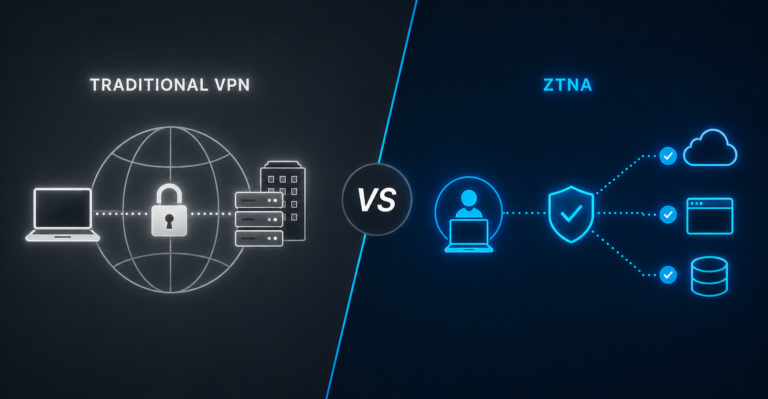
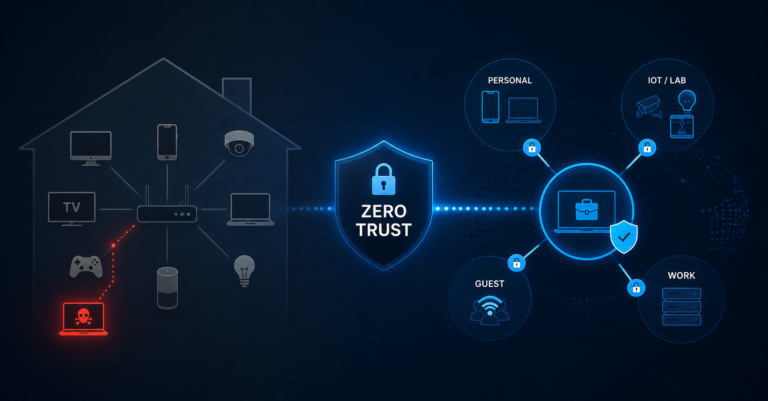
Traditional VPNs and ZTNA are often discussed as a change in how users connect.
But that shift didn’t happen randomly. It’s a symptom of something bigger.
The real transformation is this:
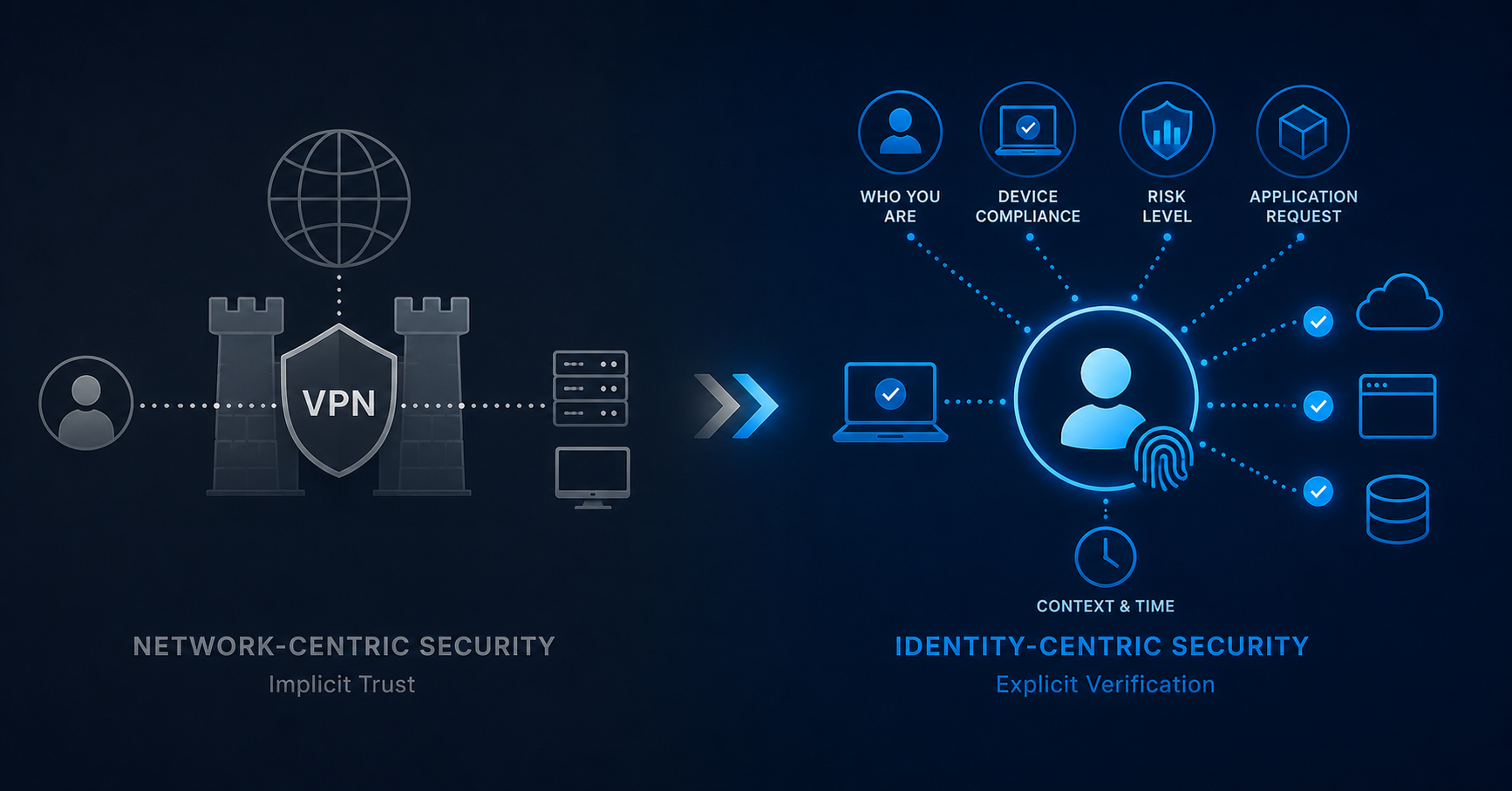
Network-Centric Security –> Identity-Centric Security
Modern Security Architecture – Part 3: Network-Centric Security –> Identity-Centric Security
This is no longer just about “how users connect.” It’s about “how we decide.”
For years, security decisions were based on network location:
- Are you inside the network?
- Are you connected to VPN?
- Are you behind the firewall?
If yes —> access granted.
That’s implicit trust.
Modern architecture flips that model.
Now decisions are based on identity:
- Who are you?
- Is your device compliant?
- What is your risk level?
- What application are you requesting?
- Should this access be allowed right now?
That’s explicit verification.
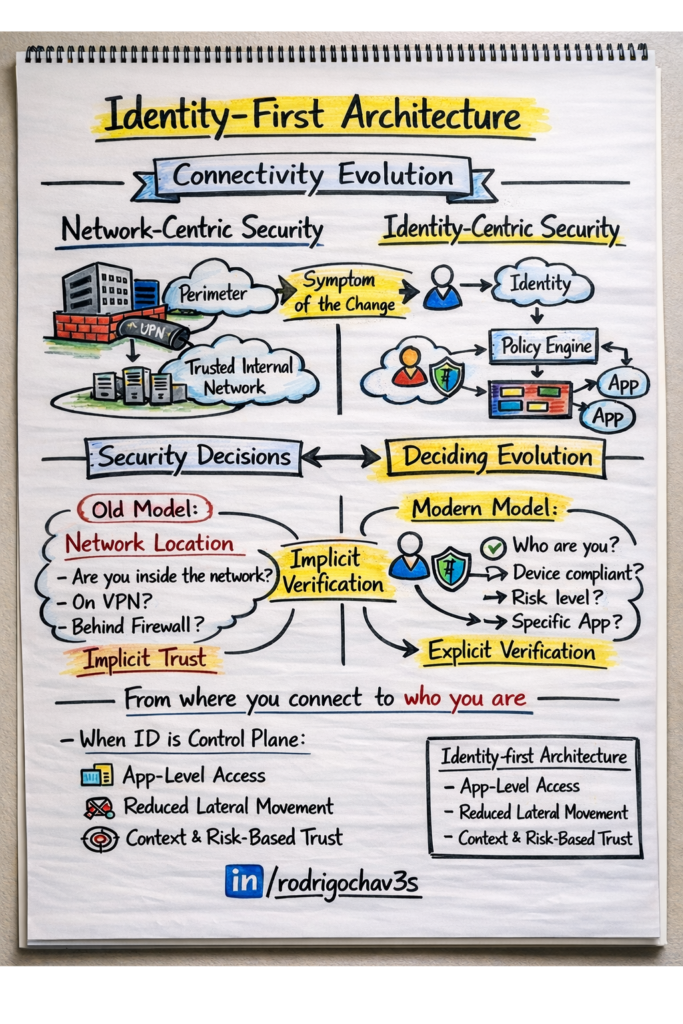
VPN vs ZTNA is the visible change.
Identity-first architecture is the reason behind it.
When identity becomes the control plane:
- Access becomes per-application
- Lateral movement risk shrinks
- Trust becomes contextual and continuous
This is not just a connectivity evolution.
It’s a decision-making evolution.
And that’s where modern security architecture truly changes.